
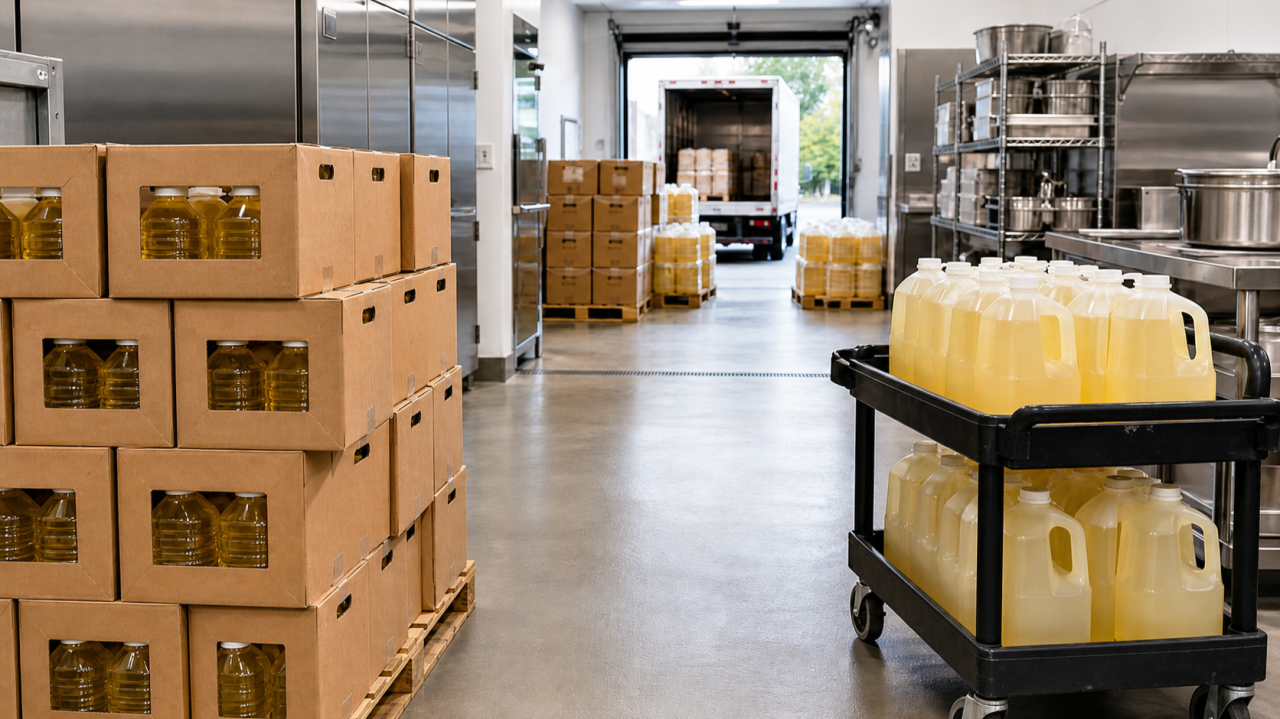
Sustainability conversations often start with the package. A material is made lighter. Recycled content is increased. Plastic is replaced with fiber. A disposable format becomes compostable. In many cases, these are worthwhile improvements. They can reduce harm and move an organization in a better direction.
But they do not all solve the same problem.
A better package is not always the same as a better system.
That distinction matters because packaging does not operate on its own. In high-volume environments, it is part of a larger supply model. It shapes how products enter a site, how often they arrive, how much space they occupy, how they are handled, and what kind of waste or recovery burden they create after use. When those conditions remain unchanged, a package may improve while the system around it stays largely the same.
This is where sustainability discussions can become narrower than they should be. Packaging is often judged by visible attributes such as recyclability, compostability, reusability, lower plastic content, or lighter weight. Those distinctions matter, and they can help teams make more responsible choices. But they do not fully answer a broader question that sustainability, procurement, and operations teams increasingly need to ask together: what kind of system is bringing this product into the site in the first place?
In foodservice, cooking oil makes that distinction unusually clear. It is one of the most heavily used ingredients in a commercial kitchen. It moves steadily through the operation, arrives in volume, and touches multiple points in the daily routine. A container may be redesigned to use a better material, less plastic, or a format with a stronger end-of-life story. That may be a meaningful improvement. But if oil still arrives in repeated packaged units, the operational pattern changes very little. Staff still need to receive it, move it into storage, bring it into the kitchen, open it, empty it, and deal with the empties after use. The packaging story may improve, but the day-to-day routine remains largely intact.
That is the difference between packaging improvement and system design.
One changes the container. The other changes the flow.
A system redesign works at a different level. It changes how product enters the site, how much packaging comes with it, how much handling is required on arrival, what accumulates in the back of house, and what eventually leaves the operation as waste. In that sense, system design does not simply improve one component. It changes the routine built around the component.
That distinction matters to every function involved in these decisions. A sustainability team may be focused on reducing material impact and improving waste outcomes. Procurement may be weighing cost, supply reliability, and service. Operators may be thinking more practically about storage space, labor, clutter, and the flow of day-to-day work. All of those concerns are valid. But when the conversation stays only at the level of packaging attributes, organizations can overestimate the value of incremental changes and underestimate the significance of structural ones.
That does not mean better packaging should be dismissed. There is real value in improving materials, reducing unnecessary plastic, and choosing more responsible formats where possible. But a better material does not automatically create a better operational or environmental outcome. If the same delivery logic, the same handling burden, and the same packaging flow remain in place, then the system has not fundamentally changed. It has simply been modified at one layer.
This is why the distinction deserves more attention. Too often, packaging improvement and system redesign are treated as though they are interchangeable. They are not. One may reduce harm within the existing model. The other asks whether the existing model itself should be reconsidered.
That is an increasingly important question in foodservice and in other high-volume operating environments. As organizations look more closely at packaging, waste, and procurement, it may no longer be enough to ask whether a package is better than the one before it. The more useful question may be whether the system around it is meaningfully different.
Because in many operating environments, the more important gains do not come only from changing what the package is made of.
They come from changing what the system requires in the first place.